
Office Clean Out: How to Declutter Your Brisbane Workplace
A workplace can become cluttered surprisingly quickly. In Brisbane offices, old desks, unused chairs, outdated computers, paperwork, packaging and broken office equipment can gradually take up valuable space. When these items are left sitting around, they can make the workplace feel crowded and make everyday tasks harder.
An office clean out gives businesses an opportunity to remove items that no longer serve a purpose and create a cleaner, more organised environment. It can be useful before relocating, renovating, downsizing, changing office layouts or simply dealing with years of accumulated clutter.
The process does not need to be complicated. With some planning, you can identify what needs to stay, what can be donated or recycled, and what needs professional removal.
Why Do Businesses Need an Office Clean Out?
Office clutter is not always created by one major event. It often develops gradually.
A few unused monitors may be placed in a storage room. Old chairs might be pushed into a corner. Cardboard boxes from deliveries can remain after equipment has been unpacked. Eventually, these small amounts of unwanted material can occupy a surprising amount of floor and storage space.
An office clean out can help businesses regain that space and make the workplace easier to use.
Common reasons for clearing a workplace include:
- Moving to a new office
- Renovating or changing the layout
- Downsizing the business
- Replacing outdated furniture
- Clearing storage rooms
- Removing old computers and electronics
- Preparing a leased property for handover
- Clearing unwanted stock and packaging
- Creating additional workspace
- Removing items left behind by previous tenants
A well-planned cleanout also makes it easier to identify items that should be recycled, donated or disposed of separately.
What Should You Remove From an Office?
Every workplace is different, but office clear-outs often involve a mixture of furniture, equipment, general rubbish and recyclable materials.
1. Office Furniture
Furniture can make up a large part of a workplace clean-up.
Common items include:
- Office desks
- Workstations
- Filing cabinets
- Office chairs
- Shelving
- Bookcases
- Reception furniture
- Meeting tables
- Storage cupboards
- Waiting-room seating
Large furniture can be difficult to move through doorways, lifts and narrow corridors. Professional removal can take care of the lifting and loading when items are too bulky to handle safely.
If furniture makes up a significant part of the clean-up, old furniture removal can be considered alongside the wider workplace collection.
2. Computers and Electronic Equipment
Technology becomes outdated quickly in many workplaces.
An office may have old desktop computers, monitors, printers, keyboards, cables, networking equipment and other electronics sitting in storage. Keeping unused equipment indefinitely can take up valuable room.
Electronic waste should also be handled responsibly rather than simply placing unsuitable electrical items into general rubbish.
The commercial rubbish removal service currently offered by Pro Rubbish Away includes office electronics such as computers, printers and monitors, with recycling considered where appropriate.
3. Paper, Cardboard and Packaging
Paper and cardboard can accumulate after office moves, equipment deliveries and stock purchases.
Before disposal, check whether documents contain confidential information. Sensitive paperwork should be dealt with according to the business’s document retention and information-security procedures.
Clean cardboard and suitable recyclable materials can then be separated from general rubbish where practical.
4. Kitchen and Break-Room Items
Workplace cleanouts can also uncover unwanted items from kitchens and staff areas.
These may include:
- Old microwaves
- Fridges
- Kettles
- Small appliances
- Cupboards
- Tables and chairs
- Damaged storage containers
- Unwanted kitchen equipment
Large appliances require additional care because of their size, weight and handling requirements. Where appliances form part of the cleanout, mention them when requesting a quote so the removal requirements can be assessed accurately.
How to Plan an Office Clean Out
Planning an office clean-out in advance helps make the process more organised and less disruptive to your business. Before arranging removal, sort your furniture, equipment and general waste to identify what needs to stay, what can be reused or recycled, and what needs to be removed. This also helps you estimate the amount of rubbish and prepare for collection.
1. Decide What Needs to Stay
Start by checking the furniture, equipment and supplies your business still uses. Some items may only be needed occasionally but could be important for future projects or daily operations.
Set aside essential equipment, business records and other items you intend to keep in a clearly marked area. This helps prevent valuable or necessary items from being removed by mistake and keeps the clean-out organised.
2. Separate Items for Reuse or Donation
Office furniture and equipment may still be useful even if your business no longer needs them. Desks, chairs, shelving and storage cabinets in good condition could be reused elsewhere in the workplace or donated to suitable organisations.
Separating these items before the clean-out helps reduce unnecessary waste and gives usable furniture a second life. It also makes it easier to identify which items genuinely need to be collected for disposal.
3. Identify Recyclable Materials
Sort recyclable materials such as cardboard, suitable metals and packaging where practical. Electronic equipment, including computers, monitors, printers and other office devices, may require specific recycling arrangements.
Keeping these materials separate makes the removal process easier to manage and helps ensure they are directed towards appropriate recycling or disposal facilities. It can also reduce the volume of general waste collected during the clean-out.
4. Create a Disposal List
Once reusable and recyclable items have been separated, prepare a list of everything that needs to be removed. Include the quantity, size and condition of bulky items where possible.
For example, your list might include:
- Six office desks
- Ten damaged office chairs
- Two filing cabinets
- Four computer monitors
- One printer
- Several boxes of general office rubbish
- Old shelving
- Packaging waste
Providing this information helps the removal team understand the scope of the job and prepare a more accurate quote.
5. Check Access Before Collection
Building access can affect how quickly furniture, equipment and other bulky items can be removed. Before booking, check whether your office has stairs, narrow corridors, lift restrictions or limited loading areas.
You should also consider parking availability, security-controlled entrances and any building management requirements for moving large items. Inform your removal provider about these conditions in advance so they can plan the collection, bring suitable equipment and minimise disruption to your workplace.
What Happens During an Office Clean Out?
A professional collection can make the physical side of the process considerably easier.
Instead of employees carrying desks, cabinets and other heavy items outside, the removal team can handle the lifting and loading as part of the service, depending on the agreed scope of work.
A typical workplace collection may involve:
- Assessing the items that need removal.
- Identifying access requirements.
- Carrying items from the office or storage area.
- Loading furniture, equipment and general rubbish.
- Separating suitable recyclable materials.
- Transporting the collected waste.
- Completing the appropriate disposal or recycling process.
The exact process depends on the type and amount of waste involved.
Businesses should also tell the provider about unusual, restricted or potentially hazardous materials before collection. Not every waste type can be handled as ordinary commercial rubbish.
How Much Does an Office Clean Out Cost?
There is no single price for every workplace clean-up.
The final cost can depend on the amount of rubbish, the type of items, accessibility and the amount of labour involved. The general rubbish removal pricing information published by Pro Rubbish Away also identifies volume, waste type, access and labour as important pricing factors.
For a workplace, additional considerations may include:
- Number of furniture items
- Amount of general rubbish
- Quantity of electronic equipment
- Weight of bulky items
- Number of floors
- Lift or stair access
- Distance from the building to the truck
- Parking or loading restrictions
- Amount of labour required
- Disposal requirements
A small office with a few desks and chairs will usually involve less work than a large workplace containing multiple rooms of furniture, equipment and accumulated rubbish.
For this reason, providing clear information before booking is important. Photos can also help when a provider offers quote assessments based on the information supplied.
Office Clean Out Before Moving
Office relocations often create much more rubbish than businesses expect.
A move forces you to look closely at everything that has accumulated over the years. Storage cupboards may contain outdated paperwork, unused equipment and forgotten supplies. Meeting rooms may have furniture that will not fit the new premises.
There may also be large amounts of cardboard and packaging once the move is complete.
An office clean out before relocation can reduce the number of unwanted items that need to be transported to the new premises.
It makes sense to complete the sorting before moving day where possible. Taking unwanted desks, chairs, cabinets and equipment to the new workplace only creates another clean-up later.
Businesses dealing with a major relocation can also combine workplace rubbish with other moving waste. The site’s moving-box article discusses how office relocations can create unwanted desks, chairs, filing cabinets and packing materials that may need to be cleared together.
Office Clean Out After Renovation
Renovating a workplace can create a mixture of office and building waste.
For example, a business may replace:
- Flooring
- Workstations
- Shelving
- Cabinets
- Partitioning
- Reception furniture
- Lighting fixtures
- Storage systems
The project may also produce timber, packaging, plasterboard, tiles and other construction materials.
Where renovation materials form part of the clean-up, renovation waste removal may be relevant. The service information covers common renovation materials such as timber, plasterboard, tiles, flooring, cabinetry, bricks, concrete and packaging.
Keeping workplace furniture separate from building debris can make the overall clean-up easier to organise.
How to Make an Office Clean Out More Efficient
A little preparation can save considerable time on collection day.
Keep Items Together: Avoid scattering unwanted furniture and rubbish across different rooms if the items can safely be grouped.
A central collection area can make loading more efficient, although heavy or awkward items should not be moved without appropriate assistance.
Remove Personal Belongings First: Employees should check desks, drawers, cupboards and storage areas before collection.
This is especially important when clearing shared offices, because personal documents, chargers, notebooks and other useful belongings can easily be mixed with unwanted items.
Deal With Confidential Documents: Do not treat sensitive business documents as ordinary rubbish.
Before the cleanout, identify paperwork that contains customer information, employee details, financial information or other confidential material. Follow the organisation’s document destruction and information-security procedures.
Identify Restricted Waste: Tell the removal provider about unusual materials before collection.
Some substances and materials require specialist handling or disposal and should not be mixed with ordinary workplace rubbish.
Arrange Removal Around Business Hours: Timing matters for busy workplaces.
If a large amount of furniture needs to move through reception areas, corridors or shared building spaces, scheduling the work at a suitable time can minimise disruption to staff and visitors.
For businesses with limited access windows, provide those details when requesting the quote.
Professional Removal vs DIY Office Clean Out
A business can choose to manage some clean-up work internally, particularly when there is only a small amount of lightweight rubbish.
However, larger clear-outs can become time-consuming.
A DIY approach may require employees to:
- Sort the unwanted items.
- Carry furniture and equipment outside.
- Find suitable transport.
- Load heavy items.
- Drive to a disposal facility.
- Pay applicable disposal charges.
- Unload the waste.
- Make additional trips if everything does not fit.
That time can be significant for a workplace.
Employees also have normal responsibilities to manage. Spending several hours moving desks, cabinets and bulky rubbish can take them away from their usual duties.
A professional collection combines lifting, loading, transport and disposal into one organised service. This can be particularly useful when the cleanout involves heavy office furniture or a large quantity of mixed commercial waste.
Is a Skip Bin Suitable for an Office Clean Out?
A skip bin can be useful for some workplace projects, particularly when rubbish will be generated gradually during a renovation.
However, a business should consider more than the advertised hire price.
Potential costs and practical considerations include:
- Bin size
- Hire period
- Delivery
- Collection
- Disposal charges
- Weight limits
- Suitable placement
- Council requirements
- Employee labour
- Loading time
A skip bin also requires someone to load it.
Professional rubbish removal works differently because the removal team comes to the property and handles the physical collection. For a one-off workplace clear-out, businesses can compare the total cost and effort involved in each option before deciding.
What Waste Can Be Removed From a Workplace?
The commercial rubbish removal service available through Pro Rubbish Away covers a broad range of workplace materials, including office furniture, electronics, retail waste, renovation debris and general commercial junk.
Common examples include:
- Desks
- Office chairs
- Filing cabinets
- Shelving
- Tables
- Packaging
- Cardboard
- Computers
- Monitors
- Printers
- General office junk
- Unwanted stock
- Renovation debris
The hard rubbish collection service also covers general office junk such as boxes, electronics and office furniture, making it relevant when a workplace clear-out involves mixed bulky items.
Some materials may require specialist disposal, so always provide accurate information about what needs to be collected.
When Should You Schedule an Office Clean Out?
There is no single ideal time for every business.
However, several situations can make a workplace clear-out particularly useful:
- Before moving to a new premises
- After an office renovation
- During a major office redesign
- When reducing storage space
- Before returning a leased property
- After replacing office furniture
- During a business restructure
- When storage areas become overcrowded
- After a large equipment upgrade
Regular smaller clear-outs can also prevent unwanted items from accumulating to the point where a major clean-up becomes necessary.
If your business already knows that a relocation or renovation is coming, planning the removal early can make the process easier.
Frequently Asked Questions
1). What is included in an office clean out?
An office cleanout can include the removal of unwanted furniture, office equipment, cardboard, packaging, general rubbish and other suitable commercial waste. The exact service depends on the items involved and the agreed collection requirements.
2). Can office furniture be removed from inside the building?
Yes, workplace furniture can often be collected from inside the premises where suitable access is available. Tell the removal provider about stairs, lifts, narrow corridors and other access conditions before booking.
3). Can old computers and monitors be removed?
Many unwanted computers, monitors and other electronic items can be collected as part of a commercial clean-up. Electronic waste should be handled responsibly, and businesses should identify these items when requesting a quote.
4). How can I prepare an office for rubbish removal?
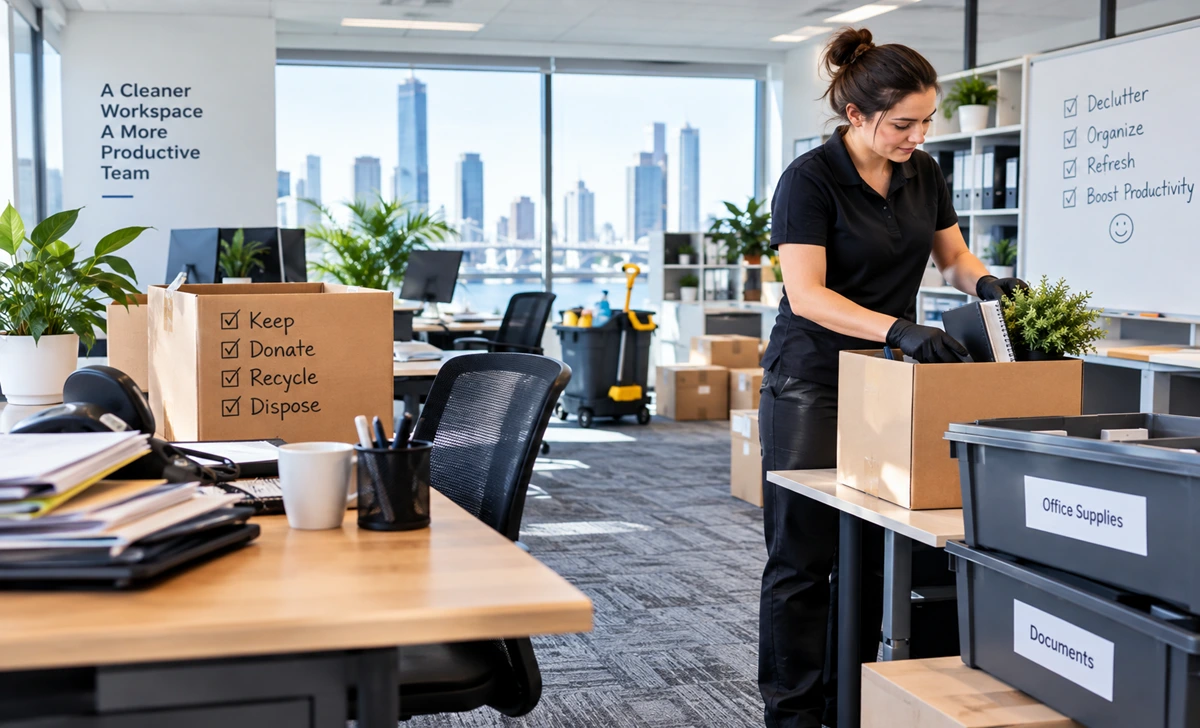
Sort items into keep, reuse, recycle and dispose categories. Remove personal belongings, identify confidential documents, group unwanted items where practical and provide clear access information to the removal team.
5). Is professional office rubbish removal better than hiring a skip bin?
The suitable option depends on the size and nature of the project. A skip bin can suit a longer renovation where rubbish is generated over several days, while professional removal can be convenient for a one-off clean-out because the team handles lifting, loading, transport and disposal.
Final Thoughts
An office clean out is more than simply removing unwanted rubbish. It gives a business the opportunity to reclaim storage space, improve organisation and create a workplace that is easier to use.
Start by identifying what the business still needs, then separate reusable, recyclable and disposable items. Pay particular attention to bulky furniture, electronic equipment, confidential documents and materials that may require specialist handling.
For larger clear-outs, professional removal can reduce the physical work involved and avoid the need for employees to organise multiple trips to disposal facilities. Pro Rubbish Away provides commercial rubbish removal for office furniture, electronics, renovation debris, retail waste and general commercial junk, with responsible disposal and recycling where appropriate.
If your Brisbane workplace has accumulated unwanted desks, chairs, equipment, packaging or general rubbish, you can arrange a collection based on the amount and type of waste that needs to go. A well-planned office clean out can leave the workplace cleaner, more organised and ready for its next stage.
Book Your Rubbish Removal in Brisbane Today!
Get fast, reliable, and eco-friendly rubbish removal in brisbane with our experienced team. We handle everything from collection to responsible disposal, making the process simple and stress-free for you.
Contact Us