
What Are the Steps Involved in Cleaning Out a Deceased Estate?
Cleaning out a deceased estate can be a difficult task, particularly when a family is already dealing with the loss of someone close. Along with the emotional side of the situation, there may be years of furniture, clothing, appliances, paperwork, personal belongings and household clutter to sort through.
The process is rarely as simple as putting unwanted items into a pile and arranging their removal. Important documents need to be protected, sentimental belongings need careful consideration, and usable items may need to be donated or sold before anything is thrown away.
A structured approach can make the work easier to manage.
Whether the property is being prepared for sale, rental, handover or simply cleared after a family member has passed away, knowing what to do first can prevent rushed decisions and unnecessary stress.
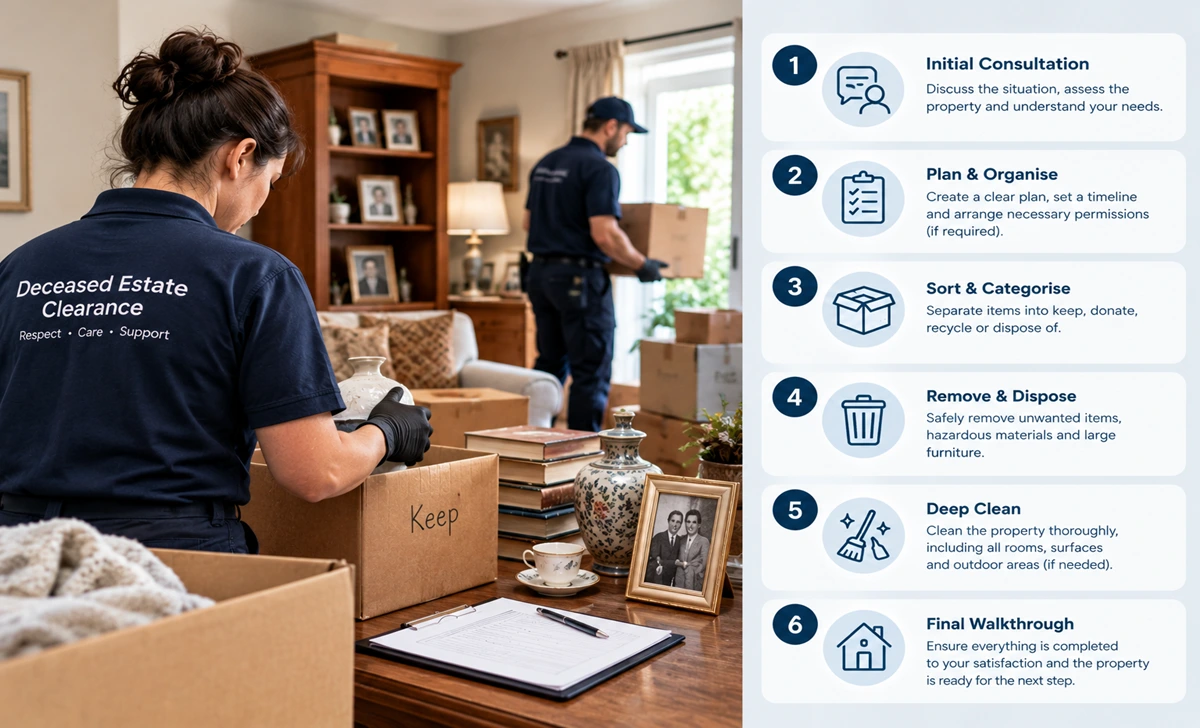
Here are the key steps involved in cleaning out a deceased estate, from the initial assessment through to the final rubbish removal.
The Steps Involved in Cleaning Out a Deceased Estate
1. Give Yourself Time Before Starting
The first step is not necessarily removing anything.
Take some time to assess the property and understand the amount of work involved. An estate may contain belongings accumulated over many years, and rushing into the cleanout can make it harder to identify what should be kept.
Walk through each part of the property and make a basic list of areas that need attention.
This may include:
- Bedrooms
- Living areas
- Kitchen
- Bathrooms
- Laundry
- Garage
- Sheds
- Outdoor areas
- Storage cupboards
- Spare rooms
A property that initially looks manageable can become a much larger job once cupboards, garages and storage areas are opened.
Breaking the work into smaller sections makes the process easier to organise and gives everyone involved a clearer idea of what needs to be done.
2. Secure Important Documents and Valuables
Before sorting general household items, look for anything that could have financial, legal or personal importance.
Estate properties may contain passports, birth certificates, property documents, insurance records, bank correspondence, wills, photographs, jewellery and other valuable possessions.
Set these items aside in a secure location.
Check places where important belongings may have been stored, including:
- Filing cabinets
- Desk drawers
- Wardrobes
- Bedside tables
- Safes
- Handbags
- Briefcases
- Storage boxes
- Cupboards
- Garage storage
Do not assume an old document or envelope is unimportant simply because it looks outdated.
If you are unsure about something, keep it separate until the executor, solicitor or appropriate family member can make a decision.
This simple step can prevent important information from accidentally being disposed of during the cleanout.
3. Separate Sentimental Belongings
The emotional side of an estate clearance often becomes most difficult when personal belongings are involved.
Photographs, letters, books, ornaments, clothing and everyday possessions may have little financial value but can mean a great deal to family members.
Before disposing of these items, give relevant family members an opportunity to decide what they would like to keep.
It can help to create separate groups for:
- Family keepsakes
- Photographs
- Personal letters
- Jewellery
- Important documents
- Items for specific relatives
- Items to donate
- Items to sell
- Items for disposal
Taking photographs of larger collections can also help family members who cannot visit the property in person.
There is no need to make every decision on the same day. Taking a little extra time can prevent regret later.
4. Decide What Should Be Kept
Once important and sentimental items have been identified, the next step is to determine what the family actually needs to keep.
This can be more difficult than expected when cleaning out a deceased estate, especially when several family members have different views about what should stay.
A deceased estate may contain several sets of furniture, old appliances, kitchenware, tools and other household items. Keeping everything may not be practical, particularly if the property needs to be cleared within a certain timeframe.
Ask whether each item has a clear purpose or personal significance.
If several family members want the same item, agree on how it will be handled before the cleanout progresses.
Clear decisions at this stage make the later removal process much simpler.
5. Sort Items for Donation
Not everything that is unwanted needs to become rubbish.
Furniture, clothing, books, kitchenware and other household goods may still be useful if they are clean, safe and in reasonable condition.
When cleaning out a deceased estate, consider whether unwanted items could be donated or given to someone who needs them before throwing them away.
However, avoid donating damaged, unsafe or heavily soiled items simply because disposal feels difficult.
Charities also have different acceptance policies, particularly for large furniture and electrical goods. Check with the organisation before arranging a large donation.
Separating usable goods early also prevents them from being mixed with general rubbish later.
6. Identify Items That May Be Worth Selling
Some belongings may have genuine resale value.
When cleaning out a deceased estate, furniture, tools, collectables, artwork, appliances, jewellery and other possessions may be suitable for sale depending on their condition and demand.
For potentially valuable items, a professional valuation may be worth considering before making a decision.
It is also useful to set a realistic timeframe. Cleaning out a deceased estate should not become a lengthy selling project if items are difficult to move or find buyers for.
Trying to sell every unwanted item individually can significantly extend the cleanout. If something does not sell after a reasonable period, the family can decide whether to donate it or arrange appropriate disposal.
The aim is to clear the property without allowing the selling process to delay everything else indefinitely.
7. Work Through the House Room by Room
Once important belongings have been separated, start the physical cleanout.
A room-by-room approach is usually easier than moving between different areas without a plan.
For each room, use simple categories:
- Keep: Items that family members want to retain.
- Sell: Items that have been selected for resale.
- Donate: Usable belongings that another person or organisation may be able to use.
- Recycle: Materials that can be recovered through suitable recycling channels.
- Remove: Broken, unwanted or unusable items that need disposal.
This system keeps the process organised and reduces the chance of accidentally throwing away something important.
It also makes it easier to see how much rubbish will remain once the sorting is complete.
8. Clear Furniture and Bulky Items
Furniture is often one of the biggest challenges when cleaning out a property.
Sofas, beds, wardrobes, cabinets, dining tables and shelving units can be heavy and awkward to move.
Some items may also need to pass through narrow doorways, down stairs or along tight side paths.
Before moving bulky furniture, consider:
- Its weight
- Whether it can be dismantled
- Access through doorways
- Stairs and narrow passages
- The number of people required
- Whether it can be donated
- Whether it needs professional removal
Avoid attempting to move extremely heavy furniture without suitable equipment or assistance.
If the property contains several unwanted pieces, old furniture removal can be a practical option for clearing bulky items without requiring family members to handle the heavy lifting themselves.
9. Sort Appliances and Whitegoods
Kitchens, laundries and garages often contain several large appliances.
When cleaning out a deceased estate, fridges, freezers, washing machines, dryers, ovens and other whitegoods can be difficult to move and may require appropriate disposal or recycling arrangements.
Start by checking whether an appliance can be reused, donated or sold.
For items that are no longer suitable, determine how they should be disposed of before putting them out for collection.
The same applies to smaller electrical equipment such as televisions, computers and printers.
Keeping electrical items separate from general rubbish can make the disposal process more organised and may allow suitable materials to be recycled.
10. Check the Garage, Shed and Storage Areas
It is easy to focus on the main living areas and forget about the spaces where belongings have been stored for years.
When cleaning out a deceased estate, garages and sheds can contain a mixture of tools, boxes, shelving, garden equipment, old furniture and miscellaneous household items.
Open every box before deciding that it is rubbish.
You may find documents, photographs, tools or other belongings that need to be kept.
Once everything has been checked, group unwanted items according to whether they can be donated, recycled or removed. This can make more organised and reduce the chance of important belongings being disposed of accidentally.
This is also a good time to identify unusually heavy or difficult items so they can be included when arranging rubbish removal.
11. Deal With the Garden and Outdoor Areas
The cleanout may extend beyond the house itself.
When cleaning out a deceased estate, outdoor areas can contain old furniture, broken garden equipment, pots, branches, leaves, damaged storage items and general rubbish.
Separate green waste from household rubbish wherever practical.
Garden materials such as branches, leaves and hedge trimmings can require different disposal arrangements from furniture or general household waste.
If the property is being prepared for sale or rental, clearing the garden can also improve its overall presentation.
A tidy outdoor area makes it easier to assess the condition of the property and identify any remaining maintenance work.
12. Separate General Rubbish From Recyclable Materials
Once the belongings have been sorted, the remaining waste should be organised before removal.
Common estate rubbish may include:
- Broken furniture
- Damaged household goods
- Old packaging
- Unwanted clothing
- Broken storage containers
- General household clutter
- Unusable appliances
- Outdoor rubbish
- Miscellaneous items
Where practical, separate materials that may be recyclable.
Cardboard, metal and some electrical items can have different disposal pathways from general waste.
This can also make the final collection more efficient because the removal team has a clearer understanding of what needs to be taken away.
13. Prepare the Property for Collection
Before arranging a rubbish removal service, make sure the family has completed the sorting process.
This is particularly important when several people are involved in cleaning out a deceased estate.
Items that must stay should be clearly separated from everything being removed.
A useful approach is to designate one area for belongings that are staying and another area for unwanted items.
Clearly marked rooms or groups can reduce the risk of accidental disposal.
It is also worth checking garages, sheds, cupboards and outdoor storage one final time before the collection arrives.
14. Arrange Rubbish Removal for Unwanted Items
Once the family has finished sorting, the remaining rubbish can be removed.
For a small estate, family members may be able to handle some items through normal household disposal options.
Larger properties can be much more difficult when cleaning out a deceased estate.
A full house may contain multiple loads of furniture, appliances, boxes and general rubbish. Transporting everything personally can require several trips, suitable vehicles and significant physical effort.
Professional rubbish removal can take care of the lifting, carrying, loading and transport.
This can be particularly useful when family members live interstate, have limited mobility or need to clear the property within a set timeframe.
15. Handle Estate Belongings With Care
A deceased estate is different from an ordinary decluttering job.
Items may have emotional value even when they appear ordinary.
For this reason, anything being removed should be clearly identified before loading begins, particularly when cleaning out a deceased estate.
Important documents, photographs, jewellery and personal belongings should never be mixed with general rubbish.
A careful removal process should also consider the condition of the property. Heavy items should be moved safely to reduce the risk of damaging floors, walls, doors or other parts of the home.
When professional assistance is required, choosing a team that understands the sensitive nature of estate clearances can make the process less stressful.
16. Consider Responsible Disposal
A large estate clearance can produce a significant amount of waste.
However, not everything needs to go directly to landfill.
When cleaning out a deceased estate, usable furniture and household items may be suitable for donation. Certain materials can be recycled, while general rubbish can be disposed of through appropriate waste channels.
Responsible disposal is particularly important when an estate contains a mixture of materials.
Items such as batteries, chemicals, paint, gas bottles and other restricted materials should not automatically be placed with general rubbish.
If you are unsure how a particular item should be handled, check the relevant disposal requirements before arranging collection.
17. Do a Final Walk-Through
Once the property appears empty, complete one final inspection.
Small belongings are easy to miss during a large cleanout.
Check:
- Cupboards
- Drawers
- Wardrobes
- Garage shelves
- Sheds
- Under sinks
- Behind doors
- Outdoor storage
- Laundry cupboards
- Attics or other storage areas
Also check that all keys, documents, photographs and personal belongings have been accounted for.
If the property is being prepared for sale or rental, look for any remaining rubbish or bulky items that could affect its presentation.
A final walk-through can prevent the need for another collection later.
How Long Does Cleaning Out a Deceased Estate Take?
There is no standard timeframe because every property is different.
A small unit with limited belongings may take considerably less time than a large family home containing decades of possessions.
The timeframe can depend on:
- Property size
- Amount of furniture
- Number of belongings
- Amount of sorting required
- Family availability
- Items requiring valuation
- Donation arrangements
- Rubbish volume
- Garage and shed contents
- Garden waste
- Property access
The sorting stage can often take longer than the physical removal.
That is why it helps to begin with important documents and sentimental belongings before arranging a collection.
What Should You Not Throw Away During an Estate Cleanout?
When cleaning out a deceased estate, it is important not to treat every unwanted item as general rubbish.
Pay particular attention to:
- Wills and legal documents
- Financial records
- Property documents
- Identification documents
- Photographs
- Jewellery
- Personal letters
- Medicines
- Collectables
- Important keys
- Items with potential historical value
If you are unsure about an item, place it in a separate area until someone responsible for the estate can make a decision.
It is much easier to dispose of something later than to recover something that has already been removed.
How Can Families Make the Process Easier?
Communication can make a major difference.
Family members may have different opinions about furniture, photographs, clothing and other belongings. Agreeing on a process before the cleanout begins can reduce disagreements.
It can help to decide:
- Who has authority to make final decisions.
- Which belongings family members want to keep.
- Which items should be sold.
- What can be donated.
- What should be recycled.
- What needs to be removed.
- When the property needs to be cleared.
Taking photographs before removing larger collections can also help family members who cannot attend in person.
There is no need for everyone to be physically present for every decision, but important choices should be communicated clearly.
When Is Professional Help Worth Considering?
Professional assistance can be useful when the amount of work becomes too large for family members to handle comfortably.
It may be worth considering when:
- The property contains a large amount of furniture.
- There are heavy appliances to remove.
- Family members live outside the area.
- The property has difficult access.
- The cleanout has a strict deadline.
- There are several rooms of general rubbish.
- The garage or shed is heavily packed.
- Family members cannot safely handle heavy lifting.
The main benefit is that the physical side of the cleanout can be handled by an experienced team while family members focus on sorting important belongings.
For a sensitive property clearance, the service should also provide careful handling rather than treating the job like an ordinary pile of rubbish.
What Happens After the Property Is Cleared?
Once unwanted belongings and rubbish have been removed, the property can move into its next stage.
Depending on the circumstances, this may involve:
- Preparing the property for sale
- Organising repairs
- Cleaning the house
- Preparing it for rental
- Handing it over to a family member
- Completing required maintenance
- Finalising the estate
A properly cleared property makes these next steps easier.
Once furniture, boxes and unwanted belongings are gone, it becomes much easier to see the condition of floors, walls, gardens and other areas that may require attention.
Frequently Asked Questions
1). What is the first step when cleaning out a deceased estate?
Start by securing important documents, valuables and sentimental belongings. Then assess each room and separate items into keep, sell, donate, recycle and remove categories.
2). How long does a deceased estate cleanout take?
It depends on the property size, amount of belongings and level of sorting required. A small unit may be cleared quickly, while a larger home can take considerably longer.
3). What happens to furniture from a deceased estate?
Furniture can be kept by family members, sold, donated or removed if it is unwanted. Bulky or heavy pieces may require professional furniture removal.
4). Can everything in a deceased estate be removed at once?
Potentially, but important documents, valuables and sentimental belongings should be separated first. The property should be checked carefully before unwanted items are loaded.
5). Is professional rubbish removal useful for a deceased estate?
Yes. It can be particularly useful when there is a large amount of furniture, appliances and general rubbish. A professional team can handle lifting, loading and removal, reducing the physical workload for the family.
Final Thoughts
Cleaning out a deceased estate takes more than simply removing unwanted items. It requires careful sorting, patience and thoughtful decisions about belongings that may have financial or sentimental value.
Starting with important documents and personal keepsakes gives family members time to decide what should stay before the physical cleanout begins. From there, furniture, appliances, garden waste and general rubbish can be separated for keeping, selling, donating, recycling or disposal.
For smaller properties, families may be able to manage much of the process themselves. Larger estates can involve significant lifting, multiple loads and difficult items that require more time and equipment.
If you are preparing a property for sale, rental or handover and need assistance with unwanted furniture, household items or general rubbish, professional deceased estate rubbish removal can take care of the physical work and help make the final clearance more manageable.
Book Your Rubbish Removal in Brisbane Today!
Get fast, reliable, and eco-friendly rubbish removal in brisbane with our experienced team. We handle everything from collection to responsible disposal, making the process simple and stress-free for you.
Contact Us