
NDIS-Friendly Rubbish Removal: Making Home Clearances Easier
Clearing unwanted items from a home can be tiring for anyone, but it can become much more difficult when mobility, strength, energy or other disability-related needs affect what a person can safely do.
Old furniture, appliances, boxes, garden waste and general household clutter can quickly build up. Moving these items may involve lifting, bending, carrying, reaching or navigating narrow areas. For some people, these physical tasks are not practical without assistance.
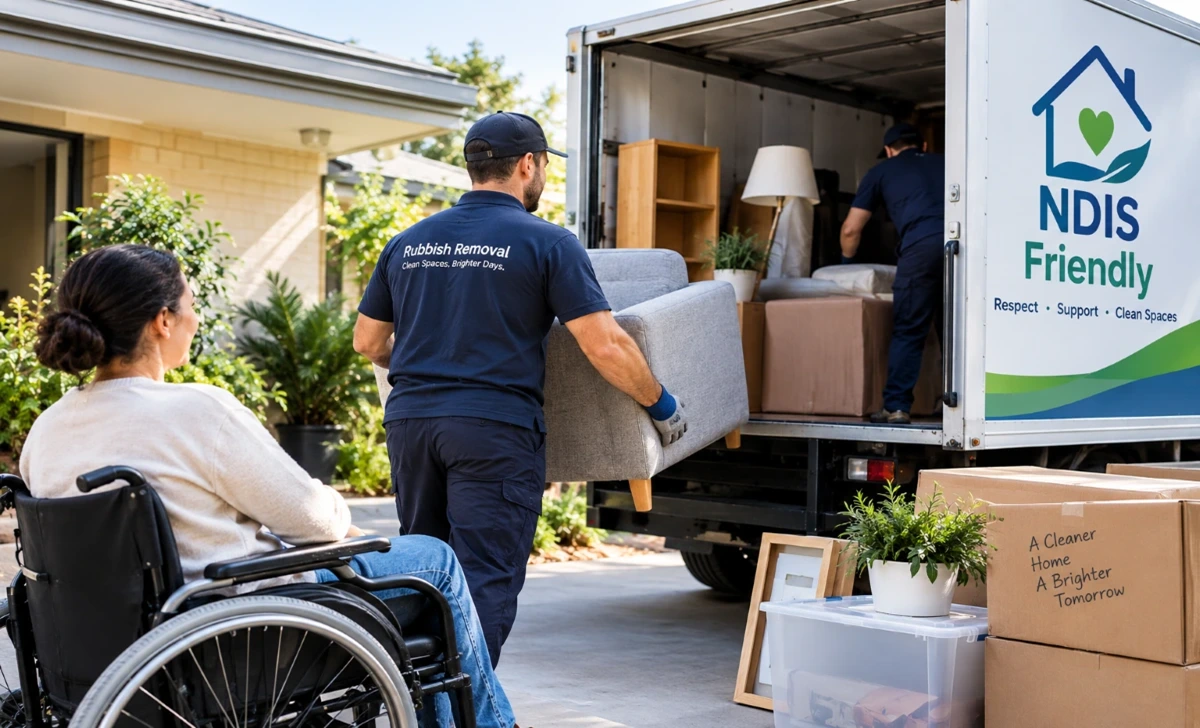
NDIS-Friendly Rubbish Removal can make the physical side of a home clearance easier by taking care of suitable unwanted items from the property. However, it is important to understand that being NDIS-friendly does not automatically mean a rubbish removal service is funded by the NDIS.
The National Disability Insurance Scheme may fund certain supports that help participants with essential household tasks when those supports relate to their disability and meet the relevant requirements. Funding depends on the participant’s individual plan and circumstances.
For a home clearance, the practical goal is simple: make the process safer, more manageable and less physically demanding.
What Does NDIS-Friendly Rubbish Removal Mean?
NDIS-Friendly Rubbish Removal is not a separate category of waste collection. It refers to a rubbish removal approach that takes accessibility, safety, communication and individual support needs into consideration.
A suitable service should make the physical removal process easier rather than expecting a person to carry heavy items to the kerb or driveway.
This can be particularly useful when a property contains:
- Old furniture
- Unwanted appliances
- Boxes and household clutter
- Mattresses
- Broken household items
- Garden waste
- Garage contents
- Renovation leftovers
- General rubbish
- Bulky items that are difficult to move
A professional removal team can handle suitable lifting, carrying, loading and transport. This can reduce the physical effort required from the person living at the property, family members or support workers.
The level of assistance should be discussed before the booking so the collection can be planned around the property and the person’s needs.
Why Can Home Clearances Be Difficult?
A home clearance can involve many physical tasks that are easy to underestimate.
Moving a wardrobe away from a wall, carrying boxes through a hallway, lifting an appliance or taking rubbish from a backyard to a vehicle can require considerable strength and balance.
Even smaller items can become difficult when there are dozens of them.
For someone with limited mobility or physical capacity, these tasks may increase the risk of:
- Falls
- Strains
- Loss of balance
- Overexertion
- Injury
- Fatigue
- Damage to furniture or property
The layout of the home can also affect the process. Ramps, narrow doorways, stairs, uneven surfaces, mobility equipment and limited turning space may all need to be considered.
This is why an accessible rubbish removal service should focus on the actual requirements of the collection rather than simply asking the resident to move everything outside.
What Can Be Removed During a Home Clearance?
The contents of a home clearance vary from one property to another.
A smaller clean-up might involve a few boxes, an old chair and a broken appliance. A larger clearance may involve furniture from several rooms, garage contents, garden waste and years of accumulated household rubbish.
Common items include:
1. Furniture
Furniture is often among the hardest household items to move without assistance.
A collection may include:
- Sofas
- Armchairs
- Beds
- Mattresses
- Wardrobes
- Tables
- Chairs
- Cabinets
- Shelving
- Desks
- Entertainment units
Professional old furniture removal can be useful when bulky pieces cannot be moved safely by the resident or their support network.
Large furniture can also be awkward to move through hallways and doorways. Let the removal team know about these items before collection so they can plan accordingly.
2. Appliances and Whitegoods
Old appliances can be heavy, awkward and difficult to handle safely.
Depending on the service and item, a household clearance may involve:
- Fridges
- Washing machines
- Dryers
- Dishwashers
- Microwaves
- Ovens
- Other unwanted appliances
These items should not be moved by someone who may struggle with their weight or size. A professional team can assess the access requirements and determine how the items can be removed safely.
3. General Household Clutter
Home clearances often involve many smaller items that have accumulated over time.
These may include:
- Cardboard boxes
- Unwanted belongings
- Broken household goods
- Old toys
- Bags of rubbish
- Damaged items
- Storage clutter
- Packaging
When there is a larger quantity of mixed household waste, household rubbish removal can provide a practical option without requiring the resident to transport everything to a waste facility.
4. Garden Waste
Outdoor areas can create their own challenges.
Branches, leaves, weeds, hedge clippings and other green waste can become difficult to move when piles become large or the garden has restricted access.
Where garden waste forms part of a broader clearance, garden and green waste removal may be suitable for dealing with unwanted outdoor material.
How Can Rubbish Removal Make a Home Clearance Easier?
The main benefit is reducing the physical work required from the person at the property.
Instead of carrying a heavy sofa outside, loading an appliance into a vehicle and making several trips to a waste facility, a removal team can manage the physical collection within the agreed scope of the service.
This can make the process easier in several ways.
Less Heavy Lifting: Bulky furniture and appliances can be difficult to handle, particularly when they need to pass through narrow doorways or around other belongings.
Having a removal team carry and load these items can reduce the need for the participant, family member or support person to perform strenuous lifting.
Fewer Trips: A personal vehicle may not have enough room for bulky furniture or large amounts of rubbish.
A suitable rubbish removal truck can collect a larger volume in one visit, depending on the size of the job. This can save time and remove the need for repeated trips to a disposal facility.
Easier Property Access: Every home has different access requirements.
Before booking, explain whether the property has:
- Stairs
- Ramps
- Narrow hallways
- Lifts
- Gates
- Uneven paths
- Limited parking
- Difficult access points
Providing this information early gives the removal team a clearer picture of the work involved.
Less Physical Strain: A home clearance does not need to become a physically demanding task for the resident.
The participant or their support person can identify which belongings need to go, while the removal team handles the physical removal of suitable items.
How to Plan an Accessible Home Clearance
Good preparation does not mean the participant needs to do the heavy work.
Instead, preparation should focus on deciding what needs to go and communicating the requirements clearly.
1. Decide What Needs to Go
Start by identifying unwanted items throughout the home.
Check areas such as:
- Bedrooms
- Living areas
- Kitchen
- Garage
- Laundry
- Storage rooms
- Sheds
- Backyard areas
Clearly separate items that are staying from those intended for removal.
2. Keep Important Belongings Separate
A home clearance can involve many belongings, so accidental disposal is something to avoid.
Keep important documents, personal items, sentimental belongings and essential equipment away from the collection area.
If several people are involved, make sure everyone understands which items should remain in the home.
3. Explain Accessibility Requirements
Tell the rubbish removal provider about anything that could affect access.
For example, explain whether the team will need to use a ramp, work around mobility equipment or enter through a particular doorway.
Clear information helps the team plan the safest way to remove bulky items.
4. Do Not Move Heavy Items Just to Prepare
This is particularly important.
If someone cannot safely move a wardrobe, fridge, mattress or sofa, they should not take unnecessary risks simply to place it outside.
Ask the removal company whether suitable items can be collected from inside the property.
Where heavy lifting and loading form part of the agreed service, the removal team can take care of this physical work.
5. Identify Items That Need Special Handling
Not every material belongs in ordinary household rubbish.
Tell the provider about unusual materials, hazardous substances or items that may require specialist disposal before the collection is arranged.
This can help prevent delays and ensure unsuitable waste is not handled incorrectly.
Is Rubbish Removal Covered by the NDIS?
This is an important point to clarify before arranging a service.
Rubbish removal is not automatically an NDIS-funded service simply because a person has an NDIS plan.
The NDIS can fund certain supports that assist participants with household tasks where the support relates to their disability and meets the relevant requirements. However, each participant’s funding and circumstances are different.
Whether a particular rubbish removal expense can be covered depends on factors such as the participant’s plan, the type of support required and the applicable NDIS rules.
For this reason, participants, nominees and support coordinators should not assume that a rubbish removal invoice can automatically be claimed from an NDIS budget.
Before arranging the service, consider:
- What supports are included in the participant’s plan.
- Whether the household task relates to the person’s disability-related needs.
- Which funding category may apply.
- Whether the proposed service meets the relevant requirements.
- Whether the provider and payment arrangement are suitable.
If there is any uncertainty, speak with the relevant NDIS contact or support professional before committing to the expense.
The practical rubbish removal service and NDIS funding are separate matters. A removal company can provide a quote for the physical work, while funding eligibility should be confirmed through the appropriate NDIS arrangements.
NDIS Rubbish Removal and Support Workers
A support worker may already help a participant with everyday household tasks.
That does not necessarily mean the support worker should perform heavy rubbish removal.
There is a difference between helping someone organise their home and physically carrying a heavy sofa, appliance or large pile of rubbish.
A support worker may assist with tasks that form part of the participant’s approved support arrangements. A rubbish removal company can then handle the physical removal of bulky waste where that service has been separately arranged.
For example, a support worker might help identify unwanted belongings and organise a room, while a removal team handles the lifting, carrying and loading of large furniture.
Keeping these responsibilities clear can help reduce unnecessary physical strain and make the home clearance easier to manage.
How to Make the Collection More Comfortable
An accessible rubbish removal service is not only about lifting heavy items.
Communication, timing and preparation can also make the experience easier.
Choose a Suitable Collection Time: Consider the participant’s usual routine when arranging the booking.
A quieter time may be preferable if unexpected activity, noise or visitors could make the process uncomfortable or disruptive.
Keep the Process Organised: Avoid moving unwanted items around unnecessarily on collection day.
Have a clear idea of what needs to be removed and communicate any changes to the team before loading begins.
Allow Enough Time: A large home clearance should not be rushed.
If the property contains several rooms of furniture and accumulated belongings, provide enough information for the removal team to understand the size and requirements of the job.
Keep Essential Access Clear: Pathways, ramps and doorways should remain accessible.
The removal team needs enough room to carry bulky items safely without blocking areas required for mobility equipment or everyday movement around the property.
What About a Garage or Storage Area?
Garages, sheds and storage areas often contain the items that are hardest to move.
They may include:
- Old tools
- Shelving
- Boxes
- Furniture
- Garden equipment
- Appliances
- Broken household items
- Miscellaneous stored belongings
A garage can become difficult to navigate when unwanted items are stacked across the floor.
For an NDIS participant, these areas may require extra care because narrow pathways, heavy items and difficult access can make the clean-up more challenging. A removal team can handle the physical lifting and carrying, allowing the clearance to be completed without placing unnecessary strain on the person living at the property.
What If the Home Needs a Larger Clearance?
Sometimes a home clearance involves much more than a few unwanted items.
A person may be downsizing, moving into more suitable accommodation, returning to a family home, clearing long-term storage or preparing a property for sale.
In these situations, rubbish may be spread across several rooms and outdoor areas.
A larger clearance may involve:
- Furniture
- Appliances
- Household clutter
- Boxes
- Garage items
- Garden waste
- Old equipment
- Renovation leftovers
Breaking the work into manageable stages can make a large clearance less overwhelming.
Start with areas that affect daily living most. Storage rooms, garages and outdoor areas can then be cleared once the main living spaces are organised.
If the property contains a large amount of mixed bulky waste, hard rubbish collection can also be relevant for items such as unwanted furniture, mattresses, appliances and other household junk.
How Much Does NDIS-Friendly Rubbish Removal Cost?
There is no standard price for an NDIS-related home clearance.
The cost of rubbish removal generally depends on the amount and type of waste, property access, labour and disposal requirements.
A few unwanted items may require only a short collection. A full property clearance involving heavy furniture, appliances and accumulated rubbish will require considerably more work.
Pricing may be affected by:
- Volume of rubbish
- Number of bulky items
- Type of waste
- Weight of materials
- Distance between the items and the truck
- Stairs or difficult access
- Amount of lifting required
- Loading time
- Disposal requirements
Providing accurate information about the property and the items that need to be removed can help the provider assess the job more accurately.
Photos may also help when a provider offers quotes based on images.
It is important to remember that the cost of NDIS-Friendly Rubbish Removal and whether the expense can be paid from NDIS funding are two different questions. A removal company can provide a price for the service, while the participant or their representative should confirm funding eligibility separately.
Choosing a Rubbish Removal Provider
For an accessible home clearance, price should not be the only consideration.
Look for a provider that can clearly explain:
- What items they can collect
- Whether suitable items can be removed from inside the property
- How bulky furniture is handled
- What access information they need
- Which materials they cannot accept
- How pricing is calculated
- How suitable materials are recycled or disposed of
- Whether collection times can be arranged around the participant’s needs
A good rubbish removal provider should understand that every property is different.
Some homes have wide access and a driveway close to the front door. Others may involve stairs, narrow paths, apartment access or limited parking.
Explaining these details before the booking can help avoid surprises on collection day.
Why Responsible Disposal Matters
A home clearance can produce more waste than expected.
Furniture may contain timber and metal. Appliances can contain recyclable components, while cardboard and other suitable materials may also have recycling options.
Responsible disposal can reduce unnecessary landfill and make the clearance process more organised.
However, recycling does not mean putting every material into the same waste stream. Different materials may require different disposal methods.
Where suitable, waste should be separated and handled according to the appropriate disposal requirements.
A Simple Home Clearance Checklist
Before arranging collection, work through this checklist:
- Identify everything that needs to go.
- Separate belongings that are staying.
- Keep important documents and personal items safe.
- Identify heavy or bulky furniture.
- Note difficult access points.
- Tell the provider about stairs, ramps or lifts.
- Identify appliances and electronic equipment.
- Separate garden waste where practical.
- Check whether any material requires specialist disposal.
- Confirm the collection date and access arrangements.
- Check NDIS funding arrangements separately if you intend to use NDIS funding.
This preparation can make the collection smoother without requiring the participant to perform unnecessary physical work.
Frequently Asked Questions
1). What is NDIS-Friendly Rubbish Removal?
It is a rubbish removal approach that considers accessibility, communication and physical limitations when clearing unwanted household items. It does not automatically mean the service is NDIS-funded.
2). Can NDIS funding pay for rubbish removal?
It depends on the participant’s individual plan and the applicable NDIS funding rules. Not every rubbish removal service will qualify, so funding eligibility should be confirmed before arranging the service.
3). Can rubbish be removed from inside the home?
Suitable furniture and other items may be collected from inside the property, depending on the agreed service and access conditions. Stairs, ramps, narrow hallways and other access requirements should be discussed before booking.
4). What items can be removed during a home clearance?
Common items include unwanted furniture, appliances, mattresses, boxes, household clutter, garden waste and other suitable rubbish. Restricted or hazardous materials may require separate arrangements.
5). Should a participant move heavy items outside first?
No. A person should not risk injury by moving heavy furniture or appliances simply to prepare for collection. Ask the removal provider whether the team can handle lifting and loading from where the items are stored.
Final Thoughts
A home clearance should make life easier, not create another physical challenge.
For people living with disability, unwanted furniture, appliances, garden waste and accumulated household clutter can be difficult to move safely. Professional rubbish removal can take care of the physical lifting, carrying, loading and transport, while the participant or support network can focus on deciding what should stay and what should go.
It is also important to separate the practical service from NDIS funding. An NDIS plan may include certain household supports where they meet the relevant requirements, but funding depends on the participant’s individual circumstances and plan.
If you are arranging an accessible home clearance, start by making a list of the unwanted items and explaining any access requirements before the collection. Pro Rubbish Away can assess the amount and type of waste involved and provide a quote for the removal service.
With the right planning, NDIS-Friendly Rubbish Removal can make a home clearance safer, simpler and less physically demanding.
Book Your Rubbish Removal in Brisbane Today!
Get fast, reliable, and eco-friendly rubbish removal in brisbane with our experienced team. We handle everything from collection to responsible disposal, making the process simple and stress-free for you.
Contact Us